
Children’s book printing costs in the UAE vary according to page count, quantity, book size, paper, colour printing, binding and finishing. A short-run paperback children’s book can have very different production costs from a full-colour hardcover or board book. This guide explains the major cost factors and shows how to estimate the budget for your project.
| Factor | Lower-cost option | Higher-cost option |
|---|---|---|
| Quantity | Small run | Bulk order |
| Format | Paperback | Hardcover |
| Pages | 24–32 pages | 40–64+ pages |
| Interior | Standard | Full colour |
| Paper | Standard coated | Premium/heavier stock |
| Binding | Saddle stitch/perfect | Hardcover/board |
| Finish | Standard | Lamination/foil/Spot UV |
| Format | Standard size | Custom size |
| Artwork | Print-ready | Illustration/design required |
In the UAE, the final price depends on several specifications rather than one fixed rate. Page count, book size, colour coverage, paper GSM, binding, print quantity, cover finishing, and production method can all affect the quotation.
As a general budgeting reference, children’s books in the UAE can fall around AED 20 to AED 80 or more per copy, depending on the specifications and quantity. Your actual quotation may be lower or higher because a 24-page paperback and a 64-page hardcover children’s book are very different production projects.
This guide explains what you should expect to pay, which specifications have the biggest effect on price, and how to choose a cost-effective format without compromising the reading experience.
How Much Does Children’s Book Printing Cost in UAE?
The children’s book printing cost in UAE commonly starts around AED 20 per copy for relatively simple specifications and can reach AED 80 or more for premium hardcover, full-colour, heavily finished, or low-quantity projects.
These figures should be treated as budgeting estimates rather than fixed market prices. Printing companies calculate quotations according to the exact specifications of the book.
For example, a short children’s storybook with a softcover, standard colour pages, and a moderate print run will normally cost less per copy than a large-format hardcover book containing full-colour illustrations, thick paper, laminated covers, and premium finishing.
The quantity you order also has a major impact. A small batch may have a higher cost per copy because setup and production costs are spread across fewer books. Larger quantities can reduce the unit cost, particularly when an appropriate offset printing process is used.
| Children’s book format | Indicative cost per copy | Main cost considerations |
|---|---|---|
| Basic paperback children’s book | AED 20–40+ | Page count, colour, paper and quantity |
| Premium paperback | AED 30–50+ | Better paper, lamination and finishing |
| Hardcover children’s book | AED 40–80+ | Rigid boards, binding and finishing |
| Premium illustrated hardcover | AED 60–80+ | Full colour, premium paper and special finishing |
| Board book | Custom quotation | Board thickness, construction and rounded corners |
These are useful planning ranges, not guaranteed prices. A printer should calculate your final price from your manuscript, page count, trim size, artwork, paper, binding and quantity.
What Determines the Cost of Printing a Children’s Book?
The biggest mistake authors make is assuming that the number of copies is the only factor that determines price. In reality, the production specifications can change the cost significantly.
A 32-page book printed in full colour on thick coated paper requires a different production process from a 100-page educational workbook printed on lighter paper. Similarly, a softcover storybook and a board book have completely different manufacturing requirements.
Understanding these variables before requesting a quotation helps you compare printing options accurately.
Page Count
Page count directly affects the amount of paper, ink, production time and binding work required.
A 24-page picture book will generally cost less to produce than a 48-page or 64-page book with the same size and specifications. If your children’s book contains many illustrations, the additional colour pages can also increase production costs.
For authors working with a fixed budget, reducing unnecessary pages can be more effective than compromising on important quality elements such as paper or colour reproduction.
Full-Colour Printing
Most children’s books depend heavily on illustrations, which means colour accuracy is particularly important.
Full-colour printing normally costs more than black-and-white printing because it uses additional ink or toner and requires appropriate paper and production settings. However, for illustrated children’s books, reducing colour quality simply to save money can negatively affect the finished product.
Children respond strongly to visual elements, so vibrant illustrations, readable text and consistent colour reproduction should remain priorities.
Paper Type and GSM
Paper selection affects both cost and the physical feel of the book.
Children’s storybooks often benefit from paper that provides good colour reproduction and sufficient thickness. Educational workbooks may require a different stock because children need to write, draw or complete activities directly on the pages.
The right GSM depends on the book’s purpose. A premium picture book may require heavier stock, while a longer educational book may use a lighter interior paper to control weight and cost.
Thicker paper generally increases material costs, but it can also make a children’s book feel more durable and premium.
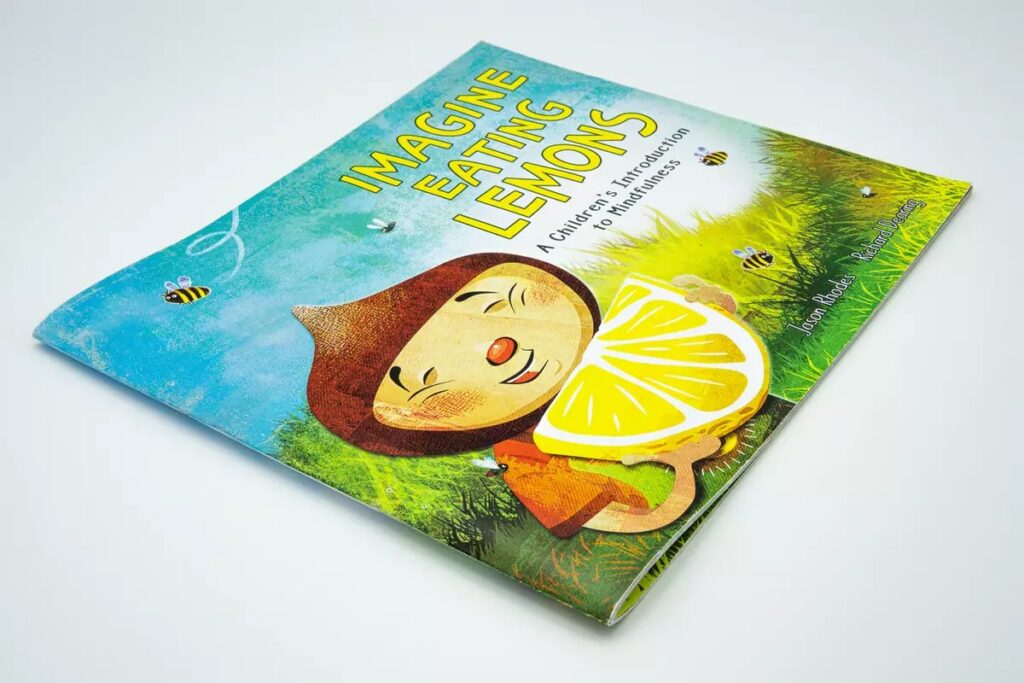
Book Size
The dimensions of the finished book also influence production costs.
Common children’s book formats include A4, A5, square formats and landscape layouts. Square books are particularly popular for picture books because they provide a balanced canvas for illustrations.
Your selected size should be based on the artwork and target audience rather than simply choosing the cheapest available format.
A large landscape book may showcase illustrations beautifully but require more paper and packaging than a smaller portrait format. Before finalising the size, ask the printer how the selected dimensions will affect the total production cost.
For premium storybooks designed as gifts or keepsakes, hardcover book printing can provide greater durability and a more professional finish than a standard paperback.
Binding Type
Binding is another major component of the final price.
Paperback or softcover binding is usually the more economical option for children’s books intended for general reading. Hardcover binding costs more because it requires rigid boards and additional construction.
For short children’s books, saddle stitching may be suitable in some cases, while thicker books can use perfect binding. Premium storybooks may use hardcover or other durable construction.
Board books are a separate category because their pages are manufactured from thick board rather than conventional book paper. This makes them particularly suitable for toddlers but also makes them more complex and expensive to produce.
Your existing children’s book service page covers these different formats, including hardcover, softcover, perfect binding, saddle stitching and board book production.
If you are comparing printing prices for different types of books, our guide to book printing cost in UAE explains how quantity, paper, size, binding and printing methods affect the overall price.
Children’s Book Printing Cost: Paperback vs Hardcover
One of the most important decisions is whether to print your children’s book as a paperback or hardcover.
A paperback is usually the better choice when affordability, lightweight shipping and larger print quantities are the main priorities. It can work particularly well for educational books, activity books and children’s stories intended for frequent but affordable distribution.
Hardcover is better suited to premium storybooks, gifts, school libraries and books intended to have a longer physical lifespan. The rigid cover gives the book a more substantial appearance, but it increases manufacturing costs.
Hardcover production is more labour-intensive than softcover production, which is one reason the final cost is higher.
| Specification | Paperback | Hardcover |
|---|---|---|
| Initial production cost | Lower | Higher |
| Durability | Good | Very good |
| Weight | Lighter | Heavier |
| Premium appearance | Moderate | High |
| Suitable for storybooks | Yes | Yes |
| Suitable for school distribution | Yes | Yes |
| Suitable for gift editions | Sometimes | Excellent |
| Budget-friendly for larger quantities | Usually | Less economical |
If your objective is to produce an affordable children’s book for commercial distribution, paperback may be the better starting point. If presentation and durability are more important, hardcover may justify the additional investment.
Does Printing Quantity Reduce Children’s Book Printing Cost?
Yes. Quantity can have a significant effect on the per-copy price.
When you order a small number of books, fixed production expenses are divided among fewer copies. As the quantity increases, the average cost per book can decrease.
For example, an author who needs a small number of proof copies may choose digital printing because it is suitable for short runs. A publisher planning several hundred or thousands of copies may consider offset printing because larger production runs can offer a lower unit cost.
Digital printing is generally useful for short runs and print-on-demand projects, while offset printing becomes more attractive as quantities increase.
This does not mean that ordering the largest possible quantity is always the cheapest decision. You should consider storage, delivery, cash flow and expected demand before committing to a large print run.
Digital vs Offset Printing for Children’s Books
The printing method should match your quantity and business model.
Digital printing is often appropriate when you are testing a new children’s book, ordering a small batch, producing author copies or printing books without committing to a large inventory.
Offset printing can become more economical for larger commercial quantities because production efficiencies can reduce the average cost per copy.
For a first-time children’s book author, a smaller digital print run can reduce the financial risk. Once the book has established demand, a larger production run may make more financial sense.
The right choice therefore depends not only on the printing price but also on how many books you realistically expect to sell or distribute.
How Finishing Changes Children’s Book Printing Price
Finishing options can make a children’s book look more attractive and protect the printed surface, but every additional process can increase production costs.
Common options include matte lamination, gloss lamination, spot UV, foil stamping, embossing, debossing and rounded corners.
For a children’s picture book, lamination can be useful because it provides additional surface protection and can improve the overall appearance of the cover. Rounded corners may also be appropriate for some children’s formats.
Premium effects such as foil or embossing are usually unnecessary if your primary objective is keeping the production budget low. They become more relevant for premium editions, special releases or gift-oriented books.
How to Reduce Children’s Book Printing Cost Without Lowering Quality
Reducing cost does not necessarily mean choosing the cheapest paper or lowest-quality printing.
The better approach is to optimise your specifications.
Start by deciding how many copies you genuinely need. Then select a practical trim size that works with your artwork. Avoid unnecessarily large dimensions if they do not improve the reading experience.
Choose a paper stock appropriate for the age group and book purpose. For a standard storybook, you may not need the thickest available stock. Similarly, expensive cover effects may not provide enough value to justify their cost.
You should also compare quotations using identical specifications. One printer may quote a lower price because the paper, page count or finishing specification is different.
A professional quotation should therefore be evaluated on the complete production specification rather than the headline price alone.
What Should You Send a Printer for an Accurate Quote?
To receive a meaningful children’s book printing quotation, provide as much information as possible.
The printer will typically need the finished page count, book size, colour requirement, interior paper preference, cover type, binding style, print quantity and finishing requirements.
You should also clarify whether your files are print-ready or whether you require formatting, illustration, cover design or other prepress services.
A properly prepared print-ready PDF can make the production process more straightforward. If your manuscript is still being developed, tell the printer because design and formatting services may need to be included separately.
Your quotation should ideally specify the production requirements so you can compare it with another supplier on an equivalent basis.
Example Children’s Book Printing Budget
Consider an author producing a 32-page illustrated children’s storybook.
If the book uses a standard size, full-colour interior pages, a laminated paperback cover and a moderate print quantity, the project could fall toward the lower or middle part of the general children’s book pricing range.
If the same book is converted into a premium hardcover with heavier paper, special finishing and a smaller print run, the unit cost can increase substantially.
This demonstrates why asking only “How much does a children’s book cost to print?” is not enough. The specifications are what determine the actual quotation.
Is Children’s Book Printing in UAE Worth the Investment?
For authors, schools, educational organisations and businesses, professionally printed children’s books can provide a physical product that is easier to distribute, sell or use in educational environments.
The important consideration is matching production quality to the purpose of the book.
A classroom workbook does not necessarily need the same specifications as a premium illustrated storybook. Likewise, a collector-style hardcover requires different materials from a low-cost educational publication.
Before ordering, determine your target audience, expected quantity, selling price and desired product quality. Then work backwards to establish a realistic production budget.
Get an Accurate Children’s Book Printing Quote in UAE
The children’s book printing cost in UAE depends on the combination of page count, book size, colour printing, paper GSM, binding, finishing, print quantity and production method.
For budgeting purposes, AED 20–80+ per copy is a reasonable starting range for many children’s book projects, but the actual cost should always be calculated from your exact specifications.
If you already have your manuscript and artwork ready, the fastest way to get an accurate price is to provide your specifications and request a custom quotation. BookPrintingUAE offers customised children’s book production for authors, publishers, schools and organisations, including different sizes, paper stocks, binding options and finishing choices.
The goal should not simply be to find the lowest price. A successful children’s book needs accurate colour reproduction, appropriate paper, durable construction and a professional finish that matches its intended audience.
Frequently Asked Questions children’s book printing cost
What is the average children’s book printing cost in UAE?
Children’s book printing can generally range from around AED 20 to AED 80 or more per copy depending on page count, colour, paper, size, binding, finishing and quantity. These figures are indicative rather than fixed prices.
Is hardcover children’s book printing more expensive?
Yes. Hardcover books require rigid boards and additional binding and finishing processes, making them more expensive than comparable paperback books.
Is digital printing cheaper for small quantities?
Digital printing is often suitable for smaller print runs because it avoids some of the setup economics associated with offset production. For larger quantities, offset printing may provide a lower cost per copy.
What is the cheapest way to print a children’s book?
A practical way to reduce the cost is to use a suitable paperback format, standard trim size, efficient page count, appropriate paper and a quantity that matches expected demand. The cheapest option should still maintain acceptable colour and print quality.
How much does it cost to print 100 children’s books in UAE?
There is no universal price because the total depends on the specifications. A 100-copy paperback children’s book can have a very different quotation from a 100-copy hardcover book with premium paper and finishing. Request a quotation using the exact page count, size, colour, paper, binding and finishing requirements.
Can I print only a few copies of a children’s book?
Yes. Small print runs can be produced using digital printing, making it possible for authors to order samples, prototypes or limited quantities before committing to larger production.
Final Thoughts
Understanding the children’s book printing cost in UAE before placing an order helps you make better decisions about your format, quantity and production budget.
Rather than selecting a printer based only on price, compare the complete specifications behind each quotation. Page count, paper quality, colour reproduction, binding, finishing and quantity all contribute to the final cost.
For a first project, a professionally produced paperback may provide an affordable way to test demand. For premium storybooks, gifts or long-term use, a hardcover or durable board-book format may be worth the additional investment.
Once you know your target quantity and specifications, request a detailed quotation and compare suppliers on an equivalent basis. This gives you a much clearer picture of the real cost of bringing your children’s book from digital artwork to a finished printed product.
If you are ready to turn your manuscript into a professionally printed book, explore our children’s book printing services to compare available formats, paper options, binding and finishing choices.